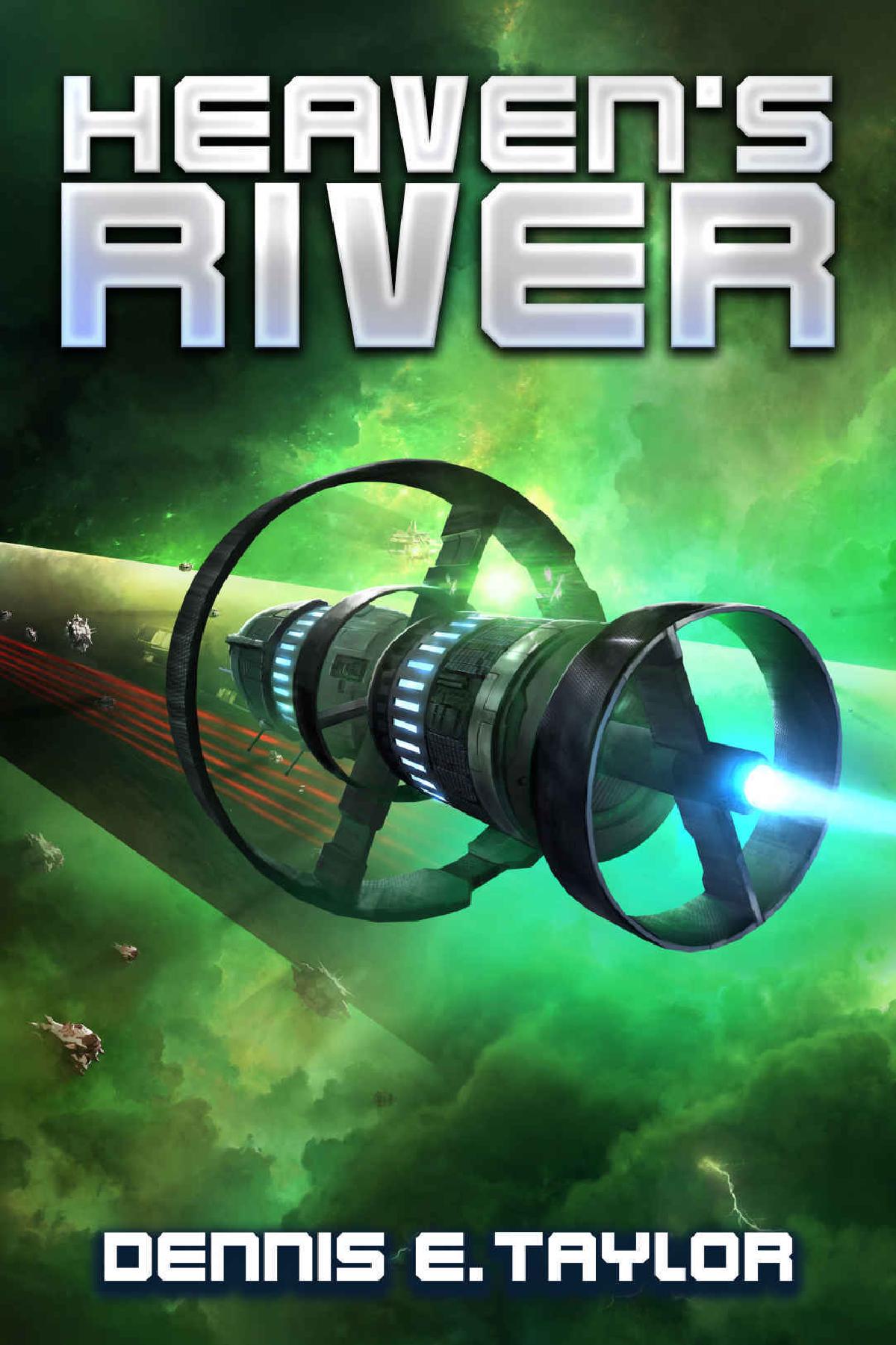
Heaven’s River is the fourth installment in the Bobiverse, published in 2020 so it took me a while to get to. I read book 3, All These Worlds back in 2018, so it’s been a while since I’ve been in the Bobiverse and it took me a while to reacquaint myself with the world, characters, and previous storylines (and to be honest, the previous storylines are fuzzy at best). Overall, this continues to just a be a fun Sci-Fi series to read while also posing some thoughtful questions about factions/groupthink, and existence in general.
The book starts off giving a good re-introduction into the Bobiverse (at least for me). You quickly become refamilizarized with the main players: Will, Bill, Howard, Bridget, and (obviously) Bob, among others. At first there seems to be some tensions in places between humans and the replicants, and some replicative drift causing some tensions in the Bobiverse, but overall everything seems to be largely OK in the Bobiverse…until Bob goes off looking for Bender and finds an alien megastructure and determines there’s a chance Bender’s matrix is somewhere in the megastructure.
I really enjoyed the introduction to the Quinlans. In the previous books I liked the use of mannies in order to interact with native species, and I really enjoyed the amphibious aspect of the Quinlans and the need to solve the issues of size, water, overheating etc. As Bob was getting closer to the Administrator, I was fully expecting Bender to have become the Administrator but was surprised to see how Bender ended up in the possession of the resistance faction among the Quinlans.
One storyline that really resonated with me was when Bob was working on the first boat after getting Bender back and his conversation with Theresa, a Quinlan University professor. These were largely quick conversations focused on philosophy, religion, and history, but one discussion lasted a little longer than the others, when Theresa introduces The Platinum Rule. This is new to Bob as we all know The Golden Rule (The Silver Rule for the Quinlans). The Platinum Rule for the Quinlans is: treat others and they’d like to be treated. At first Bob seems to find it kind of splitting haris with the Golden Rule. Upon further discussion, Theresa explains that if you treat someone as you would like to be treated, you are not really taking into account the other person’s desire; it’s largely an action rooted in your own desires. Whereas the Platinum Rule requires one to account for someone else’s needs, desires, or beliefs in our behaviors towards them. The entire scene lasted like two pages on my Kindle, but it was a very thoughtful and profound discussion that has really made me think about my own actions towards others.
The political intrigue between the various sects in the Bobiverse was a nice plot line as well. The tension between the regular Bobs, Starfleet, the Skippies, and even the gamers made the issues facing the Bobivers as whole feel more pressing. I didn’t love how Hugh was just set up as suspicious as soon as he transferred himself over to Bob (even if those suspicions turn out to be true?). I thought it was a little contrived/heavyhanded and I think the suspicions of Hugh at the end of the book could have been a better surprise if Bob wasn’t so suspcious of him the entire time. I assume this will continue to be a major plotline in the next book as well. It’s a good theme to explore, especially in a world that seems so full of factions and infighting today. It also hints at the limits of the libertarian dream that all tech bros like Bob seem to believe in (at least for a while).
I also found the intermission-like chapters placed well. It was a fun change of pace to have a few D&D chapters and chapters talking about Howard’s ever expanding empire. The author really does a great job humanizing all the various Bobs and really making them unique. The conversations about drift were intriguing. How much “Bob” is kept in the genetic line of all the Bobs? Each clone has a unique personality focusing on different aspects of original Bob’s self.
Although the book was published in 2020, it was certainly prescient to talk about AI so much, which, whatever. The author did fine and is clearly setting up some aspects of AI being problematic in the next book because it’s the topic du jour in the tech world today. I don’t have any reason to doubt the next book will handle it well, AI is just not super interesting to me.
Overall this entire book feels like a bigger setup for the next book, which works for me. I don’t always need a storyline where the fate of the universe is at stake all the time. It never felt like the stakes of the entire universe were on the line, which is fine; not every story needs that. I really like the Bobiverse, it’s a very fun universe that really deals with some important questions, but never takes itself too seriously. This book is still chock-full of pop culture references. Maybe this isn’t a fair comparison, but the Bobiverse books are kind of what Ready Player One (and espeically Two) wanted to be if it had an interesting that wasn’t solely based on nostaligc pop culture references.